
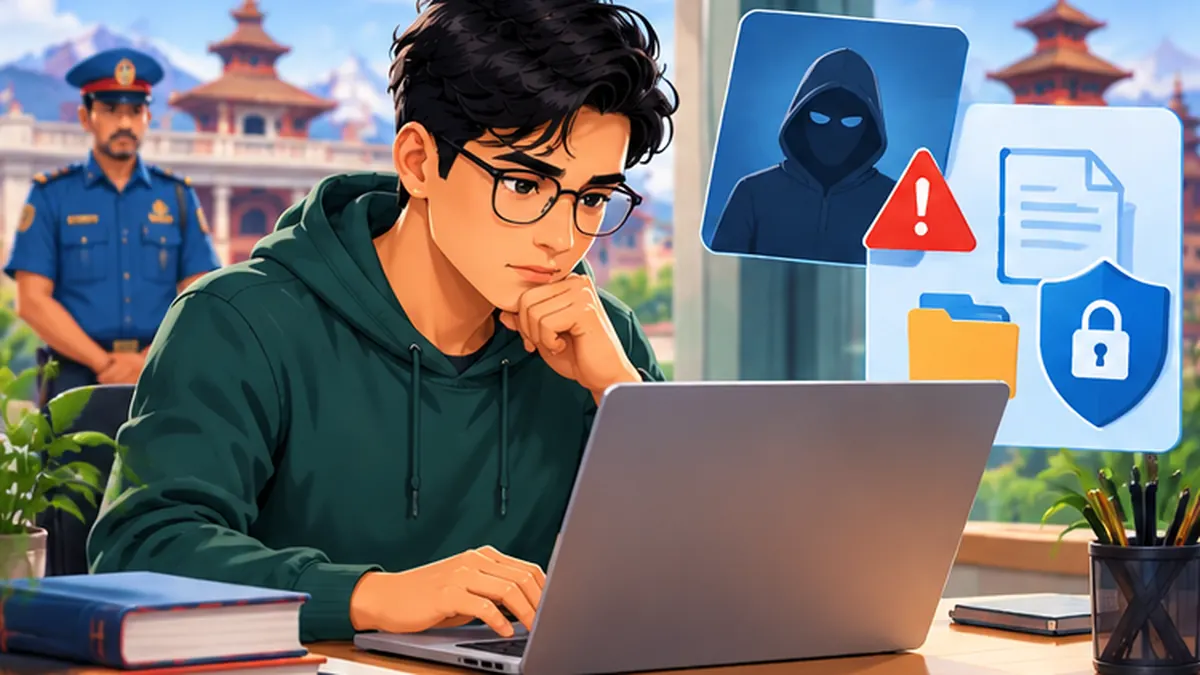
Step-by-step instructions
Stop further loss and protect your accounts
If a bank or wallet transaction is involved, contact the provider immediately through its published support channel. Change compromised passwords from a trusted device and tell contacts not to act on messages sent from a stolen social-media account.
Preserve original evidence
Save the full URLs of fake profiles, suspicious pages and payment destinations, plus clear screenshots of chats, transaction references and dates. Do not edit screenshots to remove inconvenient details; keep originals securely. Do not forward intimate or sensitive images into large public groups.
Open the official Cyber Bureau reporting page
Navigate to cyberbureau.nepalpolice.gov.np/report-cyber-crime and select the complaint category that actually fits: financial fraud, fake or hacked identity, harmful posts or other incidents. Download the relevant current application format.
Prepare identification and an incident timeline
The official instructions list an identity-document copy and clear hyperlinks/screenshots as required attachments. Write what happened in chronological order, including when you first contacted the account, how much was paid and what actions you have already taken.
Choose the submission channel mentioned by police
The bureau lists nearby police offices, the Cyber Bureau office in Bhotahity, Kathmandu, and submission by its official email when an in-person visit is not possible. Verify current contact information on the official page before sending identification or incident records.
Keep proof of the report and follow up properly
Save any acknowledgement, case or registration number and email correspondence. Use the Cyber Bureau’s published contact and follow-up page for status questions, not someone asking for a payment to “prioritise” the complaint.
Take care with threats, blackmail and identity exposure
Avoid bargaining with an extortionist or paying to get personal images deleted. If someone faces immediate physical danger, call emergency services and a trusted local support person. The police reporting route and urgent safety response are different.
Mistakes to avoid
- Deleting chats and transaction evidence before saving copies.
- Uploading a victim’s private images to public groups for “proof”.
- Trusting paid intermediaries who promise police will recover your money immediately.
Frequently asked questions
Can I report a fake Facebook or hacked account?
Yes, the official bureau reporting page lists a category for fake/hacked social-media identities and provides an application format.
What documents should be prepared?
The bureau currently lists an appropriate identity-document copy and clear screenshots/URLs, plus a completed application containing available details.
Can I report from outside Kathmandu?
The bureau lists nearby police offices and email submission for people unable to attend; check the current official page and contact channel.
Official sources and further reading
Operator rules, application screens and government procedures can change. Check the latest official instructions before sharing personal details or paying a fee.
 eSewa and Khalti Safety in Nepal: Avoid OTP and QR ScamsProtect eSewa and Khalti payments from fake support calls, OTP requests, QR-code swaps and mistaken transfers in Nepal.
 How to Secure Your Google Account in NepalA beginner-friendly Google account safety checklist: passwords, 2-step verification, device checks and recovery.
 How to Spot Fake Links, OTP Scams and Phishing MessagesSimple checks for suspicious SMS, wallet messages, job offers and fake login pages before sharing passwords or OTPs.